American toy trucks · Pressed steel, size families, and working parts
Vintage Tonka Trucks
The door decal earns a closer look. Size, equipment, finish, and shipping decide the buy.
In an old schoolhouse in Mound, Minnesota, three men set up a metalworking business in 1946. They planned to make garden tools. The next year, toy patents gave them another use for their steel: a shovel and a crane small enough for a child. The garden business fell away. The toy trucks stayed, and some of them are still turning up with dirt in the wheel wells.
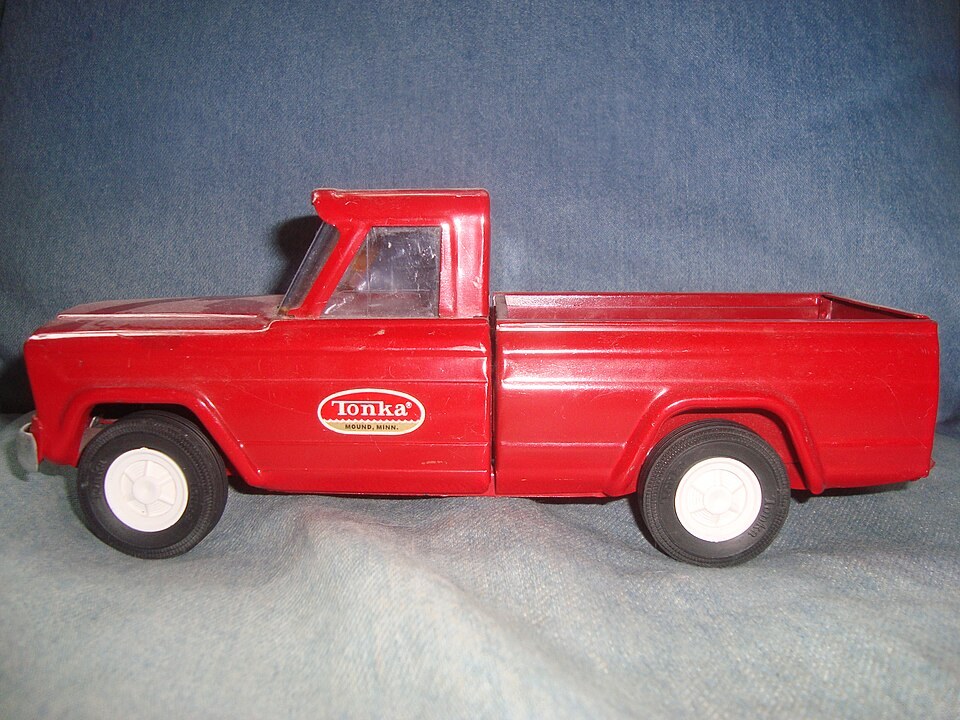
Act IThe steel was meant to work
Mound Metalcraft sold 37,000 toy shovels and cranes in its first year. Early toys used 20-gauge automotive steel and solid rubber tires, a substantial handful for a child. By 1955, the company name was Tonka Toys. The folded seams and broad panels on surviving trucks are worth a closer look, especially underneath. Other companies made metal toys too. At a sale, start with the actual maker mark, then measure the truck before assigning it a place in the Tonka range.
Act IIOne name, several sizes
The Mighty Dump arrived in the mid-1960s, and the Mighty range grew into a fleet of construction vehicles. A large car carrier could become a whole afternoon's loading job. Smaller Tonka trucks offered a different kind of fleet, with different parts and storage demands. Decades later, a search for "Tonka truck" throws those toys together again. Keep them apart. Write down the length and series before comparing sales; a Mini-Tonka and a Mighty Tonka are not interchangeable price references.
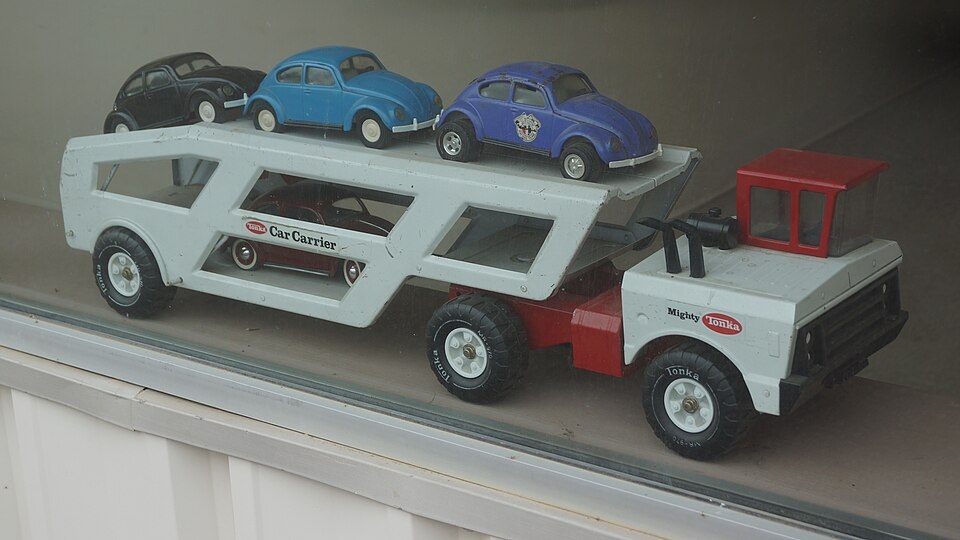
Act IIIThe missing piece was the point
A toy construction truck gives its owner something to do. A boom reaches; a carrier loads; a dump bed empties. When the working end disappears, a handsome cab can disguise how much of the toy has gone. The same problem follows a tractor without its matching trailer. Compare the exact model with a catalog or a complete example, then move each joint gently. A photograph of an extended arm proves its shape, not that a worn joint will hold a load.
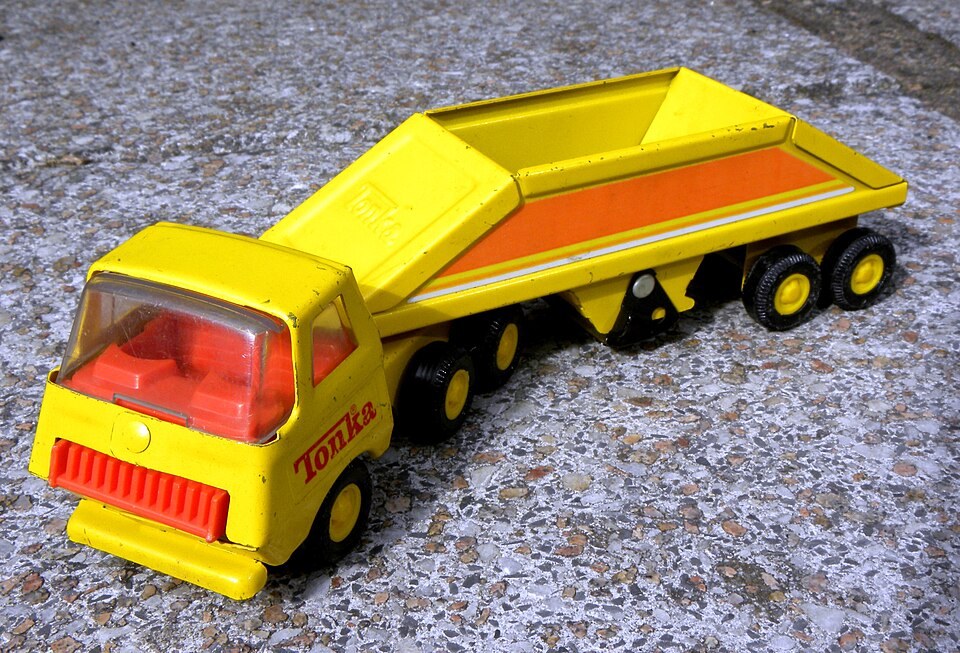
Act IVThe box has to get home
The truck on the table may be familiar enough to bring back an entire backyard. Buying it for resale still requires a less sentimental calculation. Match completed sales for the same size, equipment, and condition. Separate restored examples from factory-finish claims, and price the packed parcel before paying. A broad steel toy can use up the margin in postage. Tonka made trucks to survive punishment. Your job is to count what survived before paying for the childhood.
A particular truck can replace a childhood favorite or complete a size-and-era collection. Correct equipment and an honestly described finish matter.
Pressed-steel toy collectors, Tonka series specialists, restorers, and adults looking for a remembered truck. Their condition requirements differ.
Measure before searching. A correct tractor and trailer are a better starting point than a broad "rare vintage Tonka" description.
Sources: Hennepin History Museum: Tonka's Mound origins · Hasbro: Tonka's first year and Mighty range · The Strong: Tonka Trucks
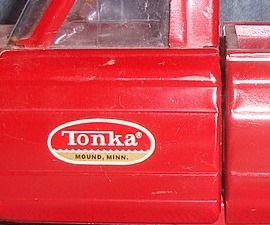 Read the decal, then verify the truck
This door reads Tonka and Mound, Minn. Photograph the full side, underside, and length as well. A decal alone cannot establish a year or prove the finish is original; compare cab, wheels, and construction with the same model.
Photo: Programmer13, CC BY 3.0. Cropped.
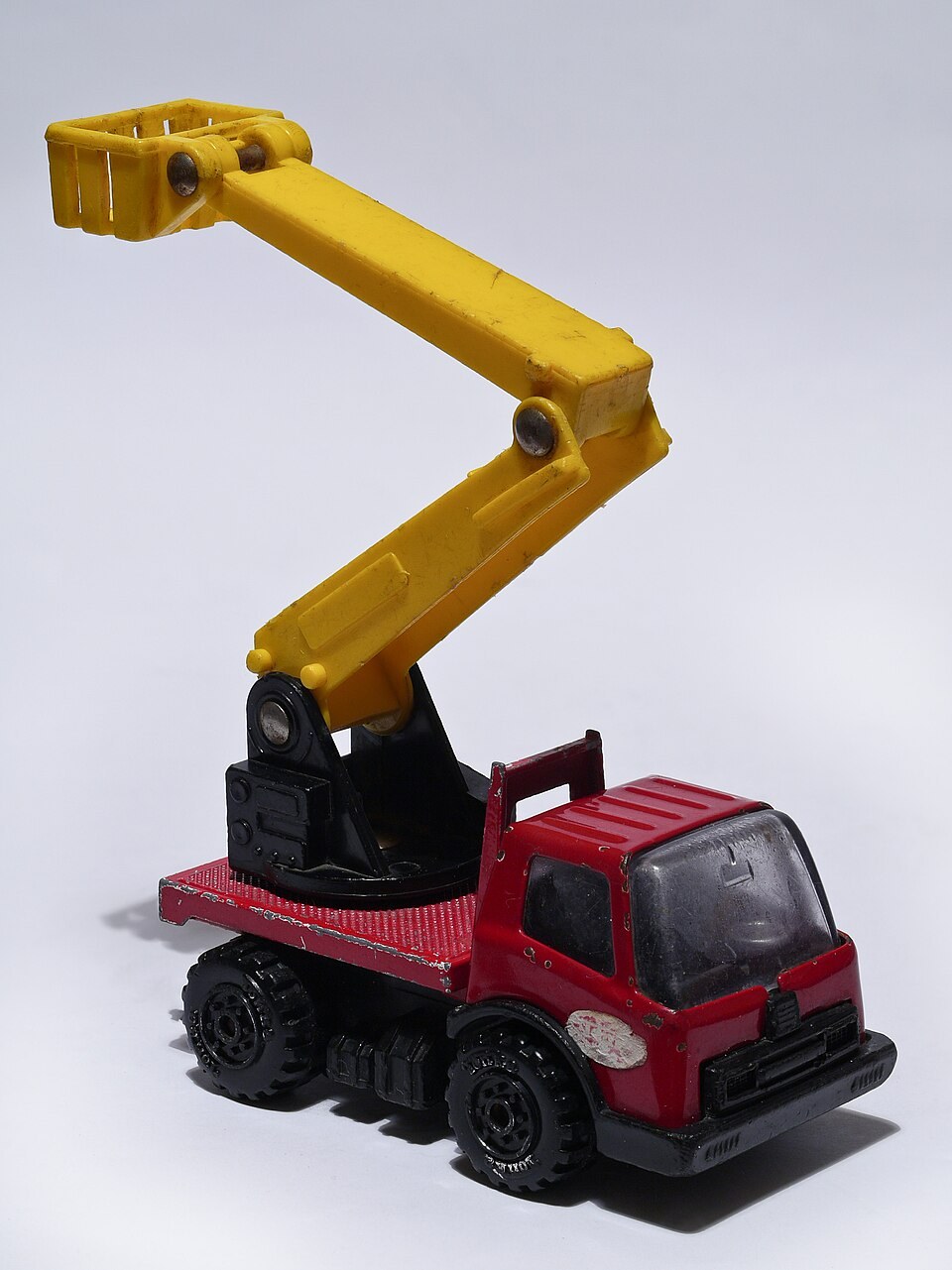 Count the working equipment
The basket, both arm sections, pivot joints, and base are visible here. On the truck in hand, confirm that the correct equipment is present and moves gently without binding or collapsing. Missing parts or cracked joints require parts-only comparisons.
Photo: Uberprutser, CC BY-SA 3.0.
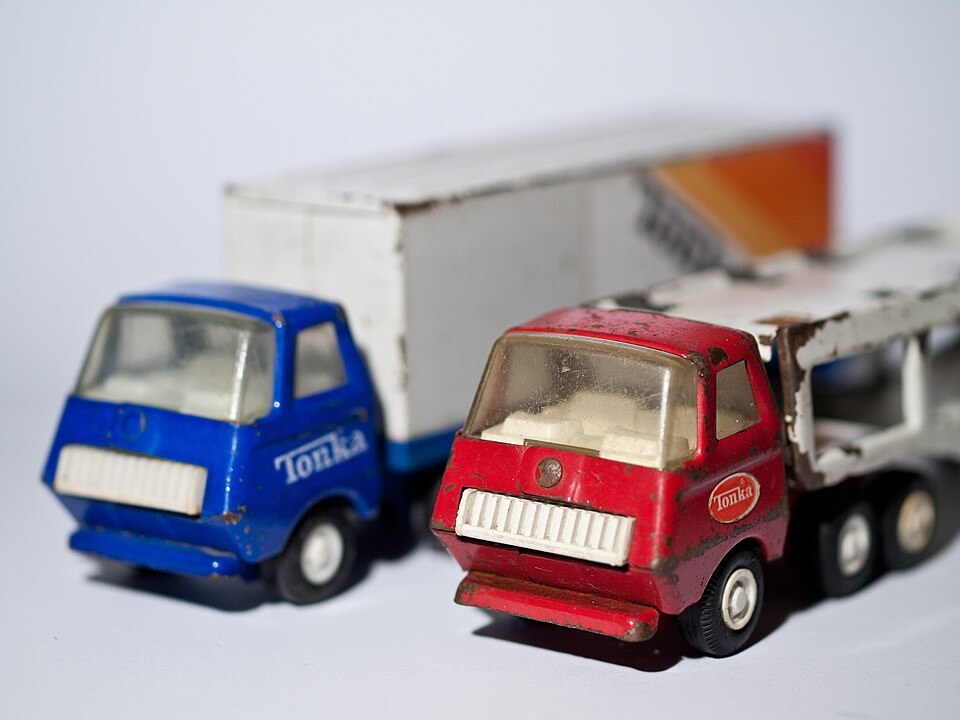 Inspect paint loss and surviving trim
The red cab shows exposed metal around its roof and door. Check those edges, the underside seams, and the windshield for damage. Wear does not prove factory paint. Paint on tires, filled seams, or mismatched surfaces calls for a restoration check before using original-condition sales.
Photo: Uberprutser, CC BY-SA 3.0.
- Find the maker: photograph every decal and underside mark. Yellow paint and steel do not identify Tonka.
- Measure the length: separate Mini-Tonka, Mighty, and other lines using marks, dimensions, and a matching catalog entry. Do not assign a series by color.
- Record the exact configuration: cab, wheels, working equipment, and any trailer or box number must agree with the comparison.
- Check every moving part: gently roll the wheels and operate the fitted mechanism. Photograph missing equipment; do not force a stiff joint.
- Inspect underneath: look for perforating rust, bent axles, cracks, fresh paint over corrosion, and sharp exposed metal.
- Calculate the parcel: measure and weigh the packed truck before setting a resale buy ceiling.
Keep the opportunity on the research list. An unknown truck cannot borrow the price of a boxed Mighty or a complete Mini-Tonka.
Ceiling = expected total buyer payment minus selling fees, shipping, packaging, repairs, tax or inbound costs, risk reserve, and your required profit. Use matching completed sales.
If the expected total payment is $50, all costs and reserve total $25, and you require $15 profit, the ceiling is $10. Change every input for the actual truck.
Use sales with the same missing parts or restoration status. If those sales cannot support the costs, pass even when the complete version looks expensive.
- The seller asks a complete-model price for missing working equipment or an unmatched trailer.
- Rust has perforated the steel, sharp edges are exposed, or cracked joints cannot support the equipment.
- A restored finish or replacement decal is sold as original and cannot be resolved with close photographs.
- The price comparison comes from a different size family, boxed set, or materially better condition.
- Postage, repairs, and your required profit leave no buying margin.
Link disclosure: eBay links currently open ordinary sold-search results. If a link becomes commission-earning in the future, it will be clearly identified near the link.
Questions collectors ask
Is Tonka a Japanese toy-car brand?
No. Tonka grew out of Mound Metalcraft in Minnesota. Tomica is a different brand from Japan. Identify the mark on the actual toy before choosing a catalog or comparable sale.
Can the Tonka logo or paint color date a truck by itself?
No. Photograph the logo and underside, measure the toy, and compare the body, wheels, fittings and mechanism with a period catalog. Decals and paint can be replaced, and similar trucks exist in different sizes.
Should you restore a rusty Tonka before selling it?
Document the existing finish and damage before doing anything irreversible. Loose dirt, missing parts, deep rust and repainting are different conditions. Compare unrestored and restored examples separately, and do not assume repainting will recover its cost.
Price method reviewed October 4, 2026. The $10 example is arithmetic, not a Tonka valuation. Search links are research starting points; confirm the exact version, condition, sale status, accepted-offer uncertainty, and shipping before bidding. Photo resizing and metadata removal do not establish a pictured toy's age or originality.