Japanese model maker · Finished display cars · 1:64, 1:43 and 1:18
Kyosho Diecast Models
The small fittings deserve as much attention as the paint. Match the scale, item number, version, and surviving parts before paying a collector's price.
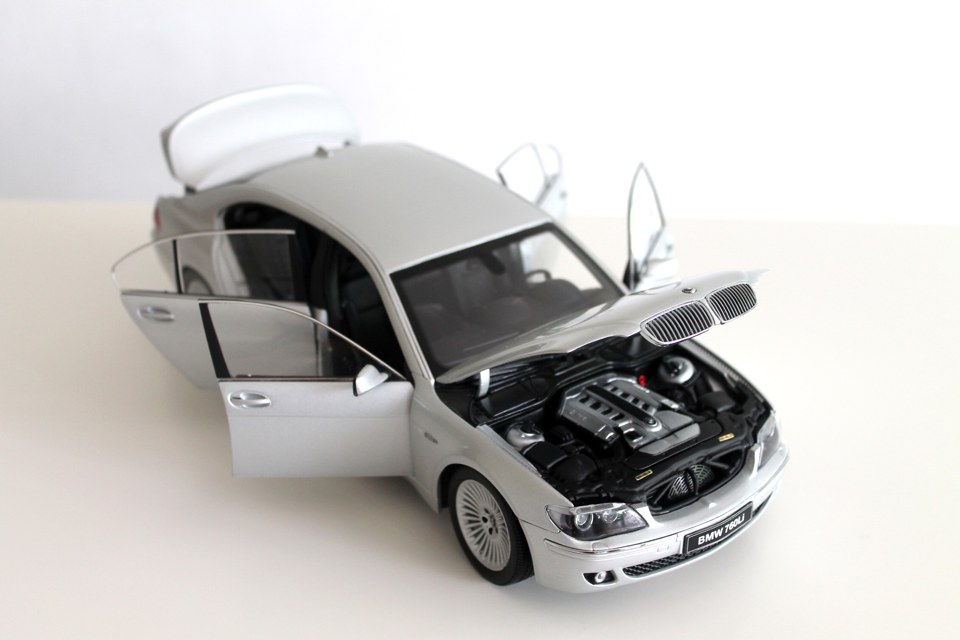
The silver BMW sits with all four doors open, its black seats visible beneath the roof. An engine fills the space under the hood. Even the exhaust has been modeled underneath. The pleasure is in finding another detail where a simpler toy would have stopped. At a sale, that same pleasure can distract you from an empty mirror mount or a box belonging to a different car. Take your time before you pick it up.
Act IA company that made cars move
Kyosho began in Tokyo in 1963, trading in models, toys, and other goods. By 1970 it was selling radio-controlled cars in Japan. That history still follows the name into a secondhand search: racing chassis, body shells, spare parts, and finished display cars can all appear together. A good-looking shell may have no running chassis beneath it. Establish which kind of object is on the table before borrowing a price from another branch of the brand.
Act IIThere was room for a car that stayed still
Finished diecast models joined Kyosho's business in the early 1990s. A miniature-car gallery followed in Tokyo in 1994; by 2001, the company was supplying models to BMW. The silver sedan here shows the appeal of a display model: the owner can look under the hood without ever starting an engine. There is also a practical consequence for a reseller. Opening parts bring hinges, separate trim, and small fittings to inspect. A photograph with the doors shut leaves some of that work undone.
Act IIIThe buyer wants a particular car
Someone looking for the car they once drove may care about its color more than its racing pedigree. A race-car collector may need the number and markings from one event. Those are different searches, even when the maker and scale match. Kyosho's catalog distinguishes versions by item number, and small suffixes can matter. Photograph the box end, then compare it with the car inside. A handsome box is useful evidence only when its label describes the actual model.
Act IVCarry the detail home intact
Support the model underneath, away from mirrors and aerials. Check the glass and trim in side light, then look for glue, paint touch-ups, and doors that no longer sit square. Keep the mounting screws and fitted packaging when they belong to the model, and plan how the car will survive shipping. Only then compare completed sales for the same version and condition. Before you decide what to pay, come back to that little mirror and make sure it is still there.
A specific car, color, racing version, or level of detail fills a place in a collection. Original small parts and matched packaging help preserve that appeal.
Scale-model collectors, owners of the full-size car, motorsport followers, and people rebuilding a shelf they remember.
Separate display models from RC equipment first. Read the item number before deciding whether two results are comparable.
Sources: Kyosho: corporate history · Kyosho: display models and RC product families · Kyosho: item-number and racing-version examples · Kyosho: scale and material distinctions · Kyosho: Auto Scale body-set contents
Inspect underneath, then get a readable mark
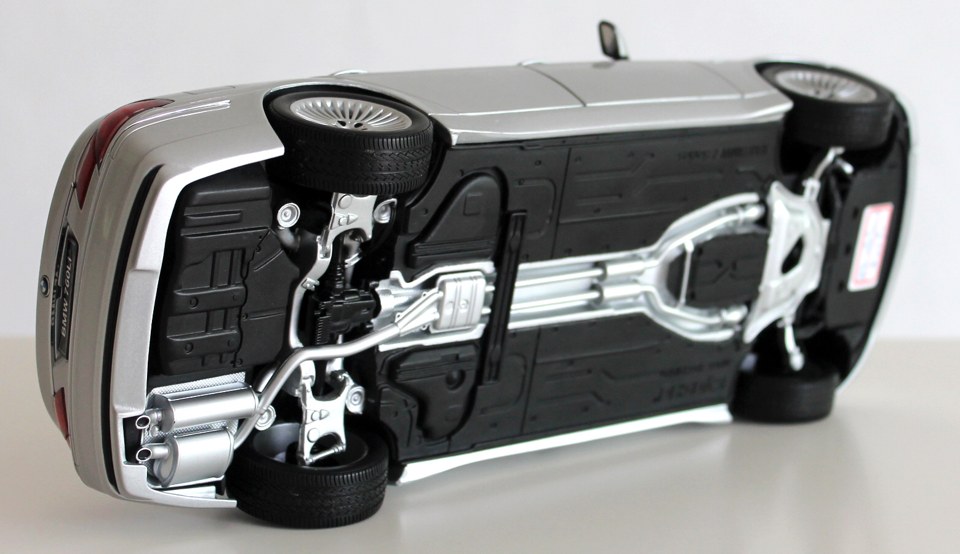
The exhaust, tires, and chassis screws are visible here. Use an underside view to check loose wheels, missing parts, and damage. The maker lettering in this photograph is not readable: it cannot authenticate your find. Get a separate sharp photo of the maker, scale, and any item number, then match the box label.
Photo: GhostLead, Wikimedia Commons, CC BY-SA 3.0; cropped and resized.
Match the opening parts to the exact model
This BMW has opening doors, hood, and trunk. Confirm which panels should open on your exact release before touching them; some display models are sealed. Compare both mirrors and all glazing with a complete reference. A hinge that binds, a glue repair, or a missing fitting fails an undamaged, complete-condition comparison.
Photo: GhostLead, Wikimedia Commons, CC BY-SA 3.0; resized.
- Identify the product family. Finished display car, RC chassis, body-only set, or kit? Do not price one as another.
- Read the maker and scale. Photograph the underside and box end in focus. A car badge identifies the vehicle, not necessarily the model maker.
- Copy the whole item number. Keep prefixes and suffixes; record color, road or racing version, event year, and racing number where applicable.
- Check the contents against the label. Photograph the car beside the box, fitted insert, base, screws, card, and supplied accessories.
- Inspect the small parts. Check mirrors, aerials, wipers, wheels, glass, and any wing or separate trim. Do not force sealed panels.
- Match completed sales. Use the same item number, scale, material, variant, and similar completeness. Separate item price from shipping and an accepted offer from a displayed asking price.
No confirmed scale or exact release. Do not pay a premium based on an expensive look-alike.
Use conservative same-version sold value, then subtract fees, packing, seller-paid shipping, risk, and your required profit.
Use comparables with the same defect or a verified replacement cost. A boxed mint result is not a loose damaged result.
Confirm the product and every required part separately. This static-model guide does not price an untested motor or an incomplete kit.
- The seller asks a complete-model price while refusing underside, box-label, or defect photographs.
- The box describes a different scale, color, car, or item number and that mismatch is being used to justify a premium.
- There is cracked or distorted bodywork, loose glazing, glue haze, or missing trim, and damaged-condition sales cannot support the asking price.
- A panel resists movement. Stop testing it; first confirm whether that release was designed to open.
- Safe packing, repairs, or replacement parts erase the margin. Do not buy an expensive repair project on the assumption that any similar part will fit.
Link disclosure: eBay links currently open ordinary sold-search results. If a link becomes commission-earning in the future, it will be clearly identified near the link.
Questions collectors ask
Is every Kyosho model a radio-controlled car?
No. Kyosho makes finished display models as well as radio-controlled products. Identify the product line, scale and item number before comparing prices. A Mini-Z body or incomplete RC chassis is not the same product as a complete static model.
Does the year in a Kyosho car name date the model?
It may describe the real car or racing season. Use the box item number, catalog entry and exact finish to identify the model release. A model of an old car can be newly made.
Which missing parts matter on a Kyosho display model?
Check mirrors, wipers, antennae, spoilers, glazing and opening panels against the exact reference model. Match the display base, fixing screws, box and loose accessories too. Never force a panel that may be fixed shut on that version.
Identification guidance reviewed October 4, 2026. No brand-wide resale range is claimed. Search snippets did not yield a reliable, current same-version sold sample; calculate a buying limit only after checking your exact model. The $80 example is arithmetic, not an observed sale.