Die-cast cars · Mattel, 1968-present
Hot Wheels
California hot rod culture, shrunk to pocket size, and still sending adults digging through bins at dawn.
In 1968, Mattel co-founder Elliot Handler looked at the sensible little die-cast cars coming out of England and decided American kids deserved something faster and flashier. He hired real car people to build it. The most famous of them was Harry Bentley Bradley, a Detroit designer who had styled production Chevrolets and based the Custom Fleetside casting on his own wildly customized El Camino. The first sixteen castings, the Sweet 16, all followed one recipe: take the custom-car scene of late-1960s Los Angeles and shrink it to three inches.

Act ISpeed was the product
What made the Sweet 16 different wasn't looks alone. Candy-bright Spectraflame lacquer over polished metal, mag-style wheels, and low-friction axles meant a Hot Wheels car would flat outrun a Matchbox down a strip of orange track. Mattel sold the track, too. Within a year the sensible English toy car had a California problem, and Matchbox retooled its whole line (the Superfast series) to catch up.
Act IIThe redline decade
Collectors call 1968 to 1977 the redline years, after the thin red stripe on the tires. This is the grail era: Spectraflame colors, US and Hong Kong production, castings that were dropped and never rerun. It's also where the hobby's legends live. The rear-loading Beach Bomb, a VW bus prototype too narrow to work with the Super-Charger booster, was redesigned before release, and the few surviving originals now trade for six figures. One hard rule from the era follows every garage-sale find: rust on a redline's metal base kills the value, no matter how pretty the paint.

Act IIIScarcity becomes the product
In 1995 Mattel stopped waiting for scarcity to happen and built it in. Treasure Hunts, short-run cars mixed randomly into regular cases and marked with a flame-in-circle logo, turned the pegboard into a slot machine. Super Treasure Hunts followed in 2007 and upgraded the prize: Spectraflame paint and rubber Real Riders tires on an otherwise ordinary-looking car. That's why tires matter at a folding table. A dollar-bin casting with rubber tires and a hidden $TH logo can be a $30 car.
Act IVThe grown-ups came back
Licensed castings of real cars changed who collects. Porsche and VW people, muscle car people, and (especially since the 2010s) JDM fans chasing Skylines and Datsuns treat Hot Wheels as automotive culture at pocket prices. Mattel leaned in with the collectors-only Red Line Club and convention exclusives. The buyers at the top of this market are adults, and serious ones.

Real-car licenses (JDM, muscle, Porsche, VW), the glow of Spectraflame on a redline, deliberately scarce Treasure Hunts, factory errors, and childhood memory doing the bidding.
Redline veterans, Super TH hunters, casting completists, JDM and VW fans, error collectors, mint-on-card buyers, and customizers hunting donor bodies.
"Is it Hot Wheels?" is the wrong question. Base country and year, tire type, TH/$TH logo, paint, and card condition decide whether it's a $0.50 car or a $30 one.
Sources: The Strong National Museum of Play: Hot Wheels · The Strong: original Redlines and collector value · Mattel: company history · Mattel: Hot Wheels brand
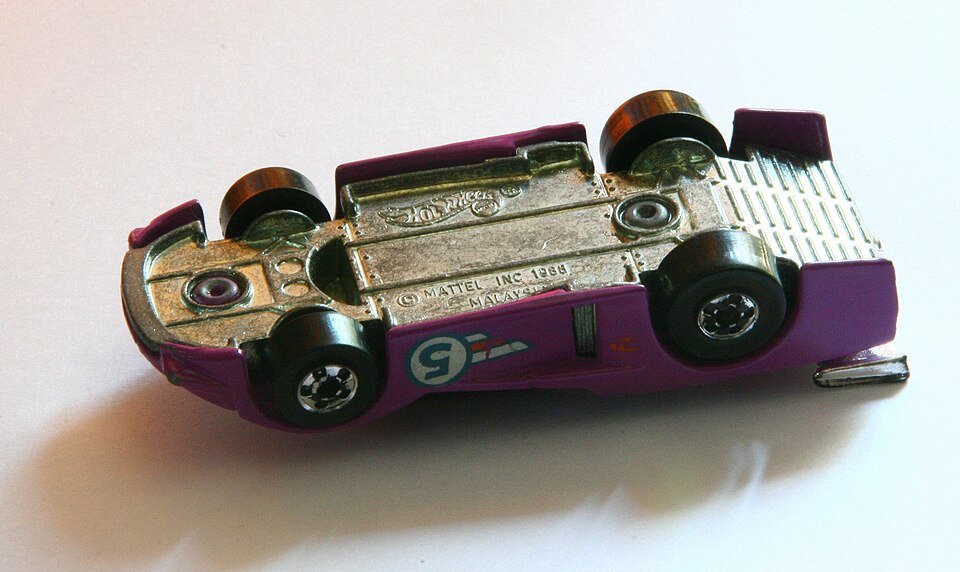 Base: casting, copyright, country
Photograph the entire base in one sharp frame. The copyright is usually a casting-design date, so pair it with country, wheels, and package.
Photo: Stefan-Xp, CC BY-SA 3.0, via Wikimedia Commons.
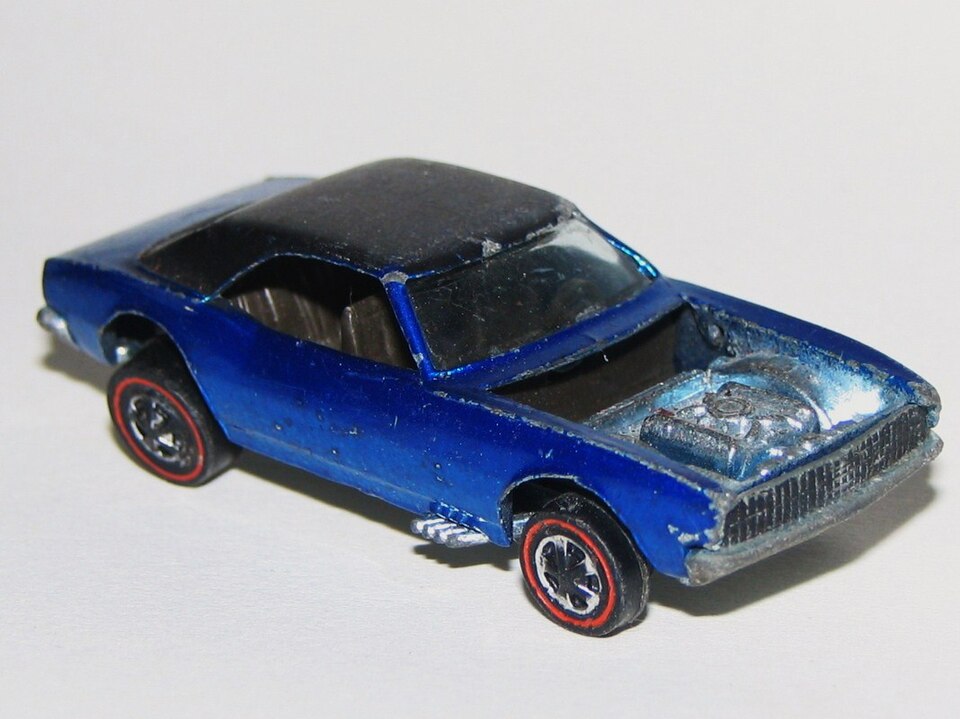 Wheels: redline or rubber tread
Shoot the wheel side and tread. This 1968 Custom Camaro shows period red-stripe tires; modern Real Riders use rubber and need a different comp.
Photo: Curtis Palmer, CC BY 2.0, via Wikimedia Commons.
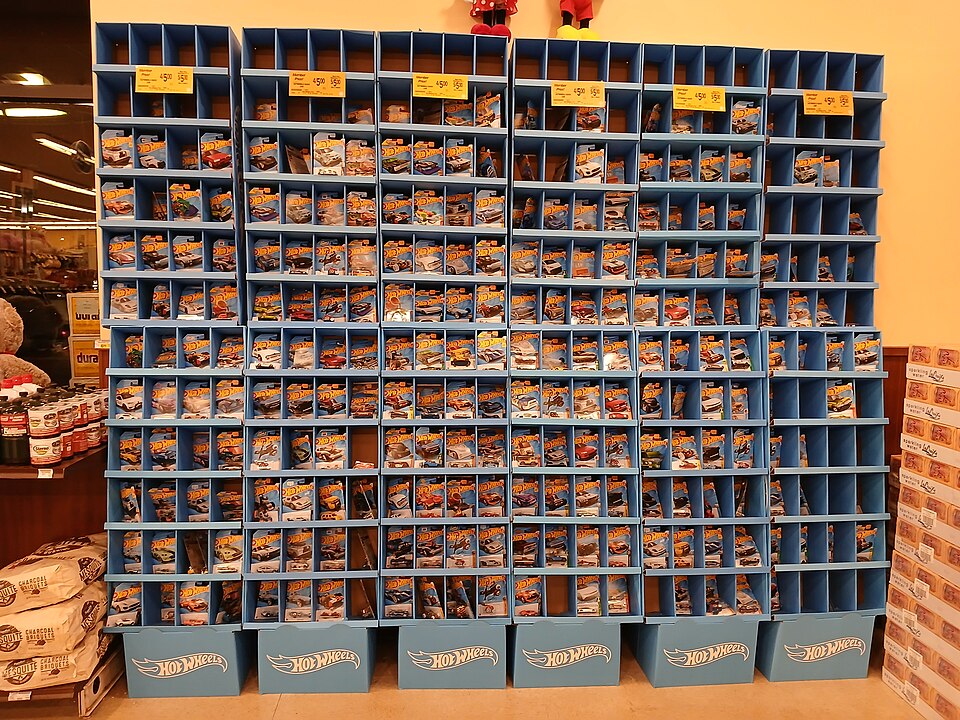 Scan the display car by car
Treasure Hunts hide among ordinary releases. Match the exact casting, paint, body symbol, and tires instead of pricing from the words Hot Wheels.
Photo: Ser Amantio di Nicolao, CC BY-SA 4.0, via Wikimedia Commons.
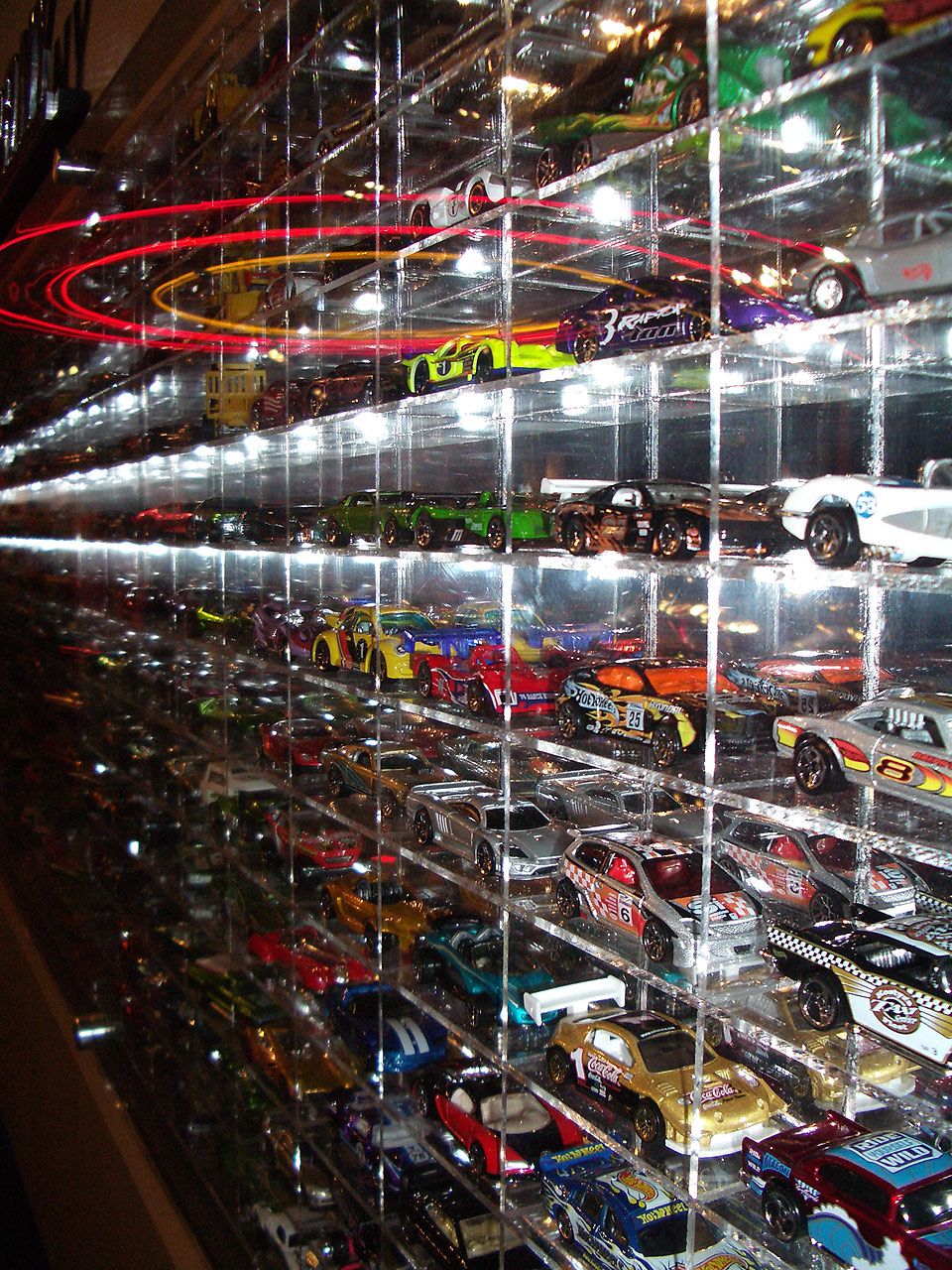 Package condition is part of the object
Photograph creases, hanger hole, blister clarity, edge lift, and the card back. A clean carded car and the same loose car need separate sold searches.
Photo: Matt, CC BY 2.0, via Wikimedia Commons.
- Flip the base: casting name, © year, country of manufacture.
- Check the tires: red stripe? rubber Real Riders?
- Hunt for a TH or $TH logo on the body.
- Judge paint, windshield, and axles.
- Carded car? Judge the blister and card creases.
- Loose modern mainline? Move on: don't linger.
Real-car license, popular casting (JDM / VW / Porsche), clean.
Flat card, clear blister, unpunched, popular casting.
Flame-in-circle logo, decent card.
Spectraflame paint + Real Riders + TH logo.
Red-stripe tires, Spectraflame, Hong Kong / USA base, no rust.
Missing tampo, wrong wheels, numbered editions, convention cars.
- Heavy play wear: chipped paint, deep scratches.
- Rusted redline metal bases: rust kills the value.
- Cracked or missing windshields; missing wheels or bent axles.
- Repaints or customs priced as originals.
- Crushed cards, yellowed or cracked blisters, cut card backs.
- Whole tubs of common loose mainlines: slow to move, they eat storage.
Link disclosure: eBay links currently open ordinary sold-search results. If a link becomes commission-earning in the future, it will be clearly identified near the link.
Questions collectors ask
Does a red stripe prove that a Hot Wheels car is an original Redline?
No. Check the wheel construction, axle, base, casting, paint, and production era together. Replacement wheels and added stripes can imitate the look.
What photos are needed to identify a loose Hot Wheels car?
Photograph the full base straight on, both sides, the front and rear, all four wheels, and any axle damage. Include the package front and back when it survives.
Does a Treasure Hunt symbol make every Hot Wheels car valuable?
No. Confirm the exact casting, year, package, paint, and wheel specification before checking completed sales. The symbol identifies a line, not a guaranteed price.
Criterion cards use real photographs with visible source and rights notes. Blocked pilots are local-only and cannot ship. Prices reflect eBay sold ranges as of July 2026.