MGA fashion dolls · 2001-present
Bratz Dolls
A Bratz doll becomes searchable when the character, face screening, hair, release line, outfit, and both shoe-feet agree. The common ©2001 mark begins the search. It does not finish it.
Carter Bryant worked in Barbie Collectibles at Mattel, drawing fashions and hairstyles for the expensive dolls that sit behind glass. In August 2000, still on Mattel's payroll, he carried a different set of drawings to a smaller company called MGA: four girls with oversized heads, oversized shoes, and clothes that argued with everything else on the shelf. He gave Mattel notice on October 4 and worked his last day there on the nineteenth. The dolls reached stores the following year.

Act IThe names changed on the way to the shelf
In Bryant's drawings the four girls were Zoe, Lupe, Hallidae and Jade. By the time they hit stores in 2001 they were Cloe, Yasmin, Sasha and Jade, sold under one slogan: The Girls With a Passion for Fashion. Exactly one name survived the trip. That is worth remembering beside a folding table, because the character name is the least stable thing about a Bratz doll. Cloe came back for twenty years in new hair, new face paint and new clothes. A dressed doll wearing the wrong shoes may be carrying pieces from three different releases, each aimed at a different buyer.

Act IIThe shoe is the foot
Look at the legs. On the classic bodies the leg stops at the ankle and the shoe carries the entire foot, snapped onto a peg. It let MGA build boots and platforms that no real ankle could ever wear, and it handed the category its harshest completeness test. Lose a shoe and you have lost a foot. Two shoes in the bag can still be wrong: mismatched skin tone, two lefts, a heel snapped off, or a split peg hole that will no longer grip. Pair every shoe by side and tone before you count anything else in the lot.
Act IIIA court once tried to take the whole line away
Mattel sued over those drawings. A jury awarded Mattel $10 million against a brand the appeals court described as having earned MGA more than $1 billion in interest-adjusted profit. The trial judge went further, placing the Bratz trademarks in a constructive trust and barring MGA from making virtually every Bratz female fashion doll. The Ninth Circuit vacated both orders. None of that fight shows up anywhere on the doll in your hand, which is the point. Scarcity here comes from release lines and survival rates, never from a stamped year.

Act IVOne logo, several separate markets
Standard dolls, Bratz Boyz, Lil' Bratz, modern reissues, boxed collector releases and bags of loose original clothing do not ride one price curve. A redressed 2005 doll and a complete, wanted winter release can sell a world apart. The rule is short enough to use with one hand: if you cannot name the line, keep the ceiling low.
Act V2001 is not a birthday
Turn a doll over and there it is: MGA, and a copyright year, usually 2001. It looks like a birth certificate. It is closer to a tooling number. Copyright marks follow the mold, so a doll made years later still carries the early year, and sellers price that year as rarity. The evidence that works is cumulative and dull: body mark, face screening, eye and lip color, hair fiber and part, character, outfit, both shoe-feet, accessories, box. Collector databases run to thousands of separate products for exactly this reason. Name the outfit and you have named the doll.
A sought-after early line, the right face screening, an original outfit, both correct shoe-feet, clean hair and makeup, and the box or accessories that finish the release.
Y2K nostalgia collectors, line completion buyers, Bratz Boyz and Lil' Bratz specialists, and customizers who need sound bodies, hair, and original parts.
Pair every shoe before counting the lot. Then photograph the face, hair, MGA mark, outfit, and accessories. The words vintage Bratz are too broad for a ceiling.
Sources: US Court of Appeals for the Ninth Circuit: Mattel v. MGA opinion · MGA Entertainment: About MGA · MGA Entertainment: Bratz at 25 · Lookin' Bratz: Product database · Lookin' Bratz: Face screening guide
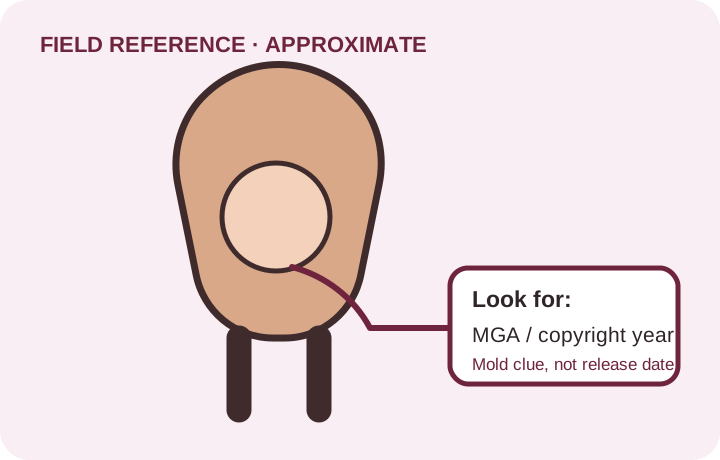 MGA body mark
Photograph the full mark, copyright year, country, and location. The common ©2001 mark points to a mold family. It does not prove a 2001 first edition.
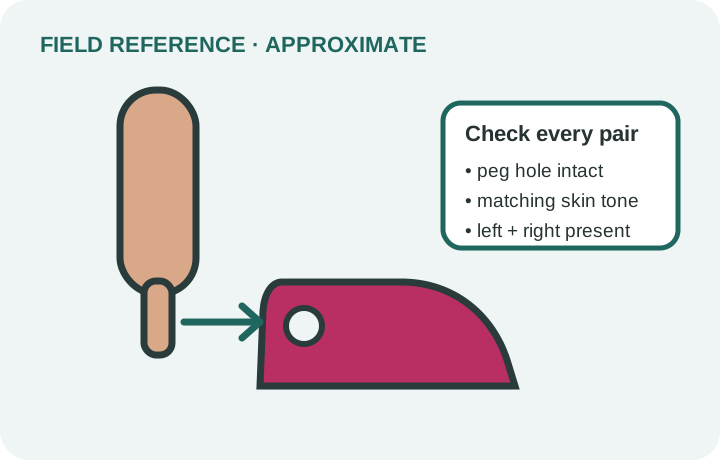 Shoe-feet and lower-leg pegs
Match left and right, skin tone, style, and peg hole. Check straps, heels, and the lower-leg peg for splits or breaks. One missing shoe is one missing foot.
Face screening and hairShoot the eyes, eye shadow, brows, lip color, pupil highlights, hair part, and hair color in daylight. These details narrow the release more reliably than a loose outfit.
Original outfit and accessoriesLay out clothing, shoes, bag, jewelry, booklet, and vehicle. Search for a complete named line. Reproductions and redressed dolls need their own lane.
- Choose the scale: standard Bratz, Bratz Boyz, Lil' Bratz, or a modern reproduction.
- Photograph the face and hair: screening, part, color, and any haircut or repaint.
- Read the mark: MGA wording, year, country, and body type.
- Pair the shoe-feet: left, right, skin tone, peg hole, heel, and straps.
- Build the outfit: clothing, bag, jewelry, booklet, and large accessories together.
- Search exact words: character + release line + original outfit, sold listings only.
Exact character and line, original main outfit, both correct shoe-feet, clean face and hair.
Reliable line identification, strong completeness, and exact sold evidence. Do not transfer a rare-line result to a common doll.
Sound body, both feet present, no haircut, heavy staining, or face wear.
Dressed, paired shoes, and grouped by character or line.
High MGA share, shoe-feet paired, peg holes sound, and enough pieces to build outfits. Count matched units, not pieces.
- Face straight on, both profiles, hair part and ends, plus every MGA mark on the neck, back, waist, or seat.
- Both lower-leg pegs, every shoe sole and peg hole, then a group photo after the shoes are paired by side and skin tone.
- Front and back of clothing, tags, bags, jewelry, booklets, vehicles, and close-ups of cuts, stains, broken straps, or loose joints.
- A shoe-foot is missing, a lower-leg peg is broken, or the peg hole is split, yet the doll carries a complete price.
- Hair is cut, the face is repainted or worn, vinyl is heavily stained, or smoke and mildew sit in the hair.
- The seller calls ©2001 MGA a first edition without a matching screening, outfit, or box reference.
- A large accessory bag is mostly unmatched shoes, unbranded clothing, reproductions, or damaged pieces.
Questions collectors ask
Does a copyright 2001 MGA mark prove a first-edition Bratz doll?
No. The mark often belongs to a body mold used across later releases. Use the face screening, hair, outfit, accessories, and package information to name the release.
Why do Bratz shoe-feet matter?
On many classic bodies the shoe includes the whole foot. A missing pair, wrong skin tone, or mismatched style affects completeness and can make display difficult.
How do you identify a loose Bratz release?
Start with the face screening and hair, then match the original outfit, shoe-feet, accessories, body mark, and any package code to a documented product image.
Link disclosure: eBay links currently open ordinary sold-search results. If a link becomes commission-earning in the future, it will be clearly identified near the link.
Local marker diagrams are approximate field references, not authentication images. Buy ceilings reflect visible eBay sold evidence checked July 2026. Exact release, outfit, and condition always outrank a broad Bratz result.