Mattel fashion dolls · 1959-present
Barbie Dolls
Barbie is easy to recognize and hard to identify. The useful answer combines the head sculpt, face paint, hair, body and country marks, original outfit, product number, and condition.
The doll that became Barbie was sold at cigarette counters. Lilli started as a cartoon in the German tabloid Bild, and in August 1955 she was turned into a hard plastic figure just under twelve inches tall, sold to grown men as a gag gift and set out at tobacconists and newsstands beside the flowers and the chocolates. Only about 130,000 were ever made. Ruth Handler acquired several in Germany and brought them home to California. Mattel's version arrived in March 1959, and in 1964 Mattel bought the rights to Lilli outright and the German doll stopped being made.

Act IThe wardrobe was the business
The doll was the entrance fee. What Mattel sold year after year was everything that came after her: named fashions with their own boxes and numbers, shoes, stands, hats, gloves, jewelry and printed paper pieces. Charlotte Johnson, the designer Mattel hired to dress her, worked runway shapes down to a scale that had to close around a vinyl waist with a metal snap. Sixty years later that system reaches a garage sale as a grocery bag of loose clothes. Rebuilding complete fashions out of that bag is most of the work and most of the margin.

Act IIThe mark on her back is not her birthday
Turn her over and you will usually find ©1966 Mattel. It reads like a manufacturing date. It is a mold copyright, and an enormous number of dolls made in the decades afterward carry it. Country wording and the position of the mark can narrow the body's era, but a body cannot identify a whole doll on its own. Heads get swapped. A 1960s outfit will fit a body made in 1998. Reproductions copy the exact details people check. Read head, face, hair, body, outfit and box together, or do not price her at all.

Act IIIOne name, a dozen markets
Ponytail and bubble cut dolls from the first years. Mod and Superstar. Named playline dolls from the 1980s and 1990s that a specific forty year old is still hunting. Licensed collector editions. Modern Signature releases. Reproductions. Common naked bodies at the bottom of a tote. Every one of them says Barbie on the back, and no two of them share a buyer or a price curve. The clothes split the same way. A tagged, complete vintage fashion with its shoes is a different object from sixty mixed pieces in a zip bag, and it earns its own search.
Act IVNarrow it first, then price it
The temptation at a sale runs the other way: see a bin of Barbies, remember the best vintage result you ever read about, and bid against that memory. Identified dolls sell against identified comps. An unverified bag sells against other unverified bags, and that is a much shorter number. So do the dull part first. Name the doll, name the outfit, find the number on the box, then make each lane answer to its own sold listings. Everyone at the sale can name her. You get paid for identifying her.
An exact early version, correct head and body, original named fashion, clean face and hair, box or product number, and the small accessories that complete the set.
Early vintage specialists, Mod and Superstar collectors, childhood-release nostalgia buyers, licensed-theme collectors, and outfit completion hunters.
Identify dolls and clothes separately. A tagged vintage fashion, complete stand, or tiny accessory may deserve its own sold search instead of disappearing into the lot count.
Sources: Wikipedia: Bild Lilli doll · The Strong National Museum of Play: Barbie · Mattel: Barbie at 65 · The Strong archives: Barbie fashion designer papers · Doll Reference: 1966 Barbie doll marks · Doll Reference: 1959-1962 identification
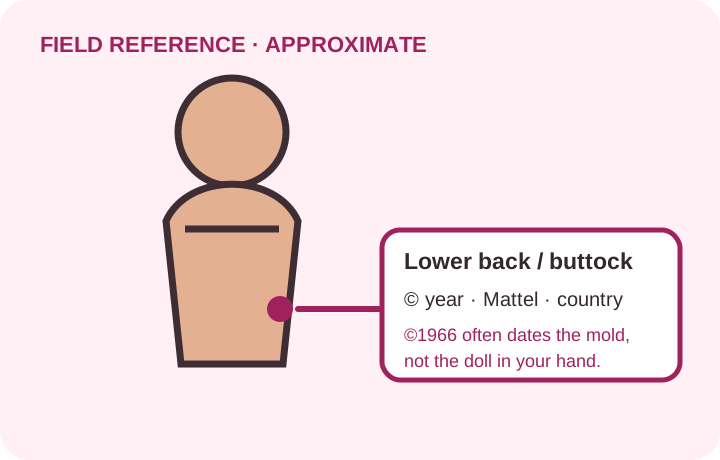 Body mark and country
Photograph every line on the lower back, waist, or seat. ©1966 often dates a mold, not manufacture. Combine the mark with the head, face, hair, body type, and country wording.
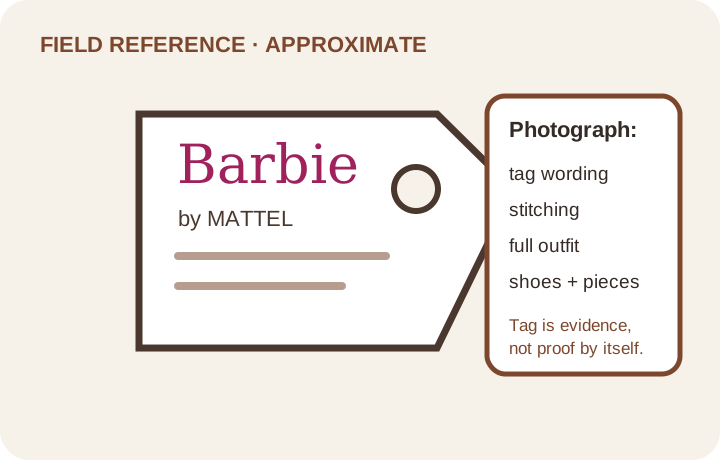 Outfit tag and complete fashion
Shoot tag wording and stitching, then the whole outfit with shoes and small pieces. A Mattel tag supports identity, but the fashion name or number and completeness make it searchable.
Head sculpt, face, and hairPhotograph eye direction, brows, lips, skin tone, hairline, hairstyle, and the back of the head. Ponytail, bubble cut, Mod, and Superstar identities cannot be assigned from clothes alone.
Box, product number, and accessoriesLay out the stand, shoes, hat, bag, jewelry, and paper pieces. Photograph the box front and back, SKU, and product name. These anchors can settle an identification that the doll alone cannot.
- Choose the lane: early vintage, 1980s-2000s playline, collector or Signature, modern common, or reproduction.
- Photograph the head: face paint, hairline, hair color, style, and any repaint or haircut.
- Read the whole body mark: copyright, Mattel wording, country, and location.
- Match the outfit: tag, garment set, shoes, stand, accessories, and box number.
- Inspect condition: green ear, neck split, sticky legs, staining, bites, loose joints, and odor.
- Search exact words: era or character + outfit or product number, sold listings only.
Head and body combination, face, country, and era agree. Original clothes and clean condition improve the case.
Exact product name or number, original fashion and accessories, box, or reliable exact sold evidence.
Specific character or line, original main outfit, clean hair and face.
No haircut, chew damage, major stain, or broken neck and joints. Lot material, not a single listing.
Count tagged, matched, usable pieces and complete fashions. Separate unbranded and damaged items.
- Face straight on, both profiles, hairline, back of head, hair ends, and every mark on the head and body.
- Outfit tags close up, full garments front and back, shoe soles, stand base, box front and back, SKU, and every small accessory.
- Green ear, neck splits, sticky or greasy legs, staining, haircut, loose joints, chew damage, restoration, and any odor source.
- The seller prices a doll as 1966 from the body copyright alone.
- Head and body eras do not agree, a reproduction is presented as an early original, or restoration is hidden.
- Green ear, a neck split, sticky legs, major staining, or a haircut remains at a clean collector price.
- A mixed bag is valued by a sixty-piece count while tags, complete fashions, and stand marks remain invisible.
- Common nude dolls, unbranded clothes, and broken shoes dominate the lot after shipping is added.
Questions collectors ask
Does a copyright 1966 Mattel body mark mean the Barbie was made in 1966?
No. It usually dates the body mold, which Mattel reused. Identify the doll from the head sculpt, face paint, hair, country mark, outfit, and product number.
What is the minimum photo set for identifying a Barbie doll?
Photograph the face, hair, back of the head, neck and body marks, hands, feet, full outfit, clothing tags, shoes, and any box or product number.
Can a Barbie outfit be worth researching without the doll?
Yes. Tagged fashions, complete named ensembles, shoes, jewelry, and small accessories have their own buyers. Identify and price them separately before making a lot.
Link disclosure: eBay links currently open ordinary sold-search results. If a link becomes commission-earning in the future, it will be clearly identified near the link.
Local marker diagrams are approximate field references, not authentication images. Buy ceilings reflect visible eBay sold evidence checked July 2026. Early dolls, rare named fashions, and special editions require exact identification before bidding.