Foshan ceramic sculpture · Guangdong, China
Shiwan Pottery
Colored glaze gets the first look. The base decides the research lane: artist inscription, workshop seal, exposed clay, later inventory marks, and every repaired projection.
Questions collectors ask
Does an artist name on the base prove who personally made a Shiwan figure?
No. A readable name supports attribution research, but it may refer to an artist, workshop, studio line, or later production. Match the full wording to a reliable record.
How should later numbers or letters on Shiwan pottery be treated?
Record them separately from impressed seals and inscriptions. Paint, marker, or incised inventory codes may belong to a shop, collector, auction, or later cataloging system.
Where should a Shiwan figure be checked for repairs?
Inspect fingers, staffs, hats, ears, hems, necks, and the base under straight and raking light. Look for glue, overpaint, color shifts, filled chips, and changed texture.
On a folding table the figure looks theatrical: layered glaze, a bare clay face, sleeves frozen in motion. Underneath, the mood changes. There may be three columns of Chinese characters, a square seal, one black letter, and a number scratched in later. They did not all arrive at the same time. Reading them as one mark is how an artist object becomes a bad comp.

Act IA pottery district made sculpture
Shiwan sits in Foshan, Guangdong, where local clay, river transport, and kiln production supported a pottery industry for centuries. Useful wares came first. By the Ming and Qing periods the same workshops were making artistic vessels, figures, animals, miniature landscapes, and ceramic roof sculpture. The English market often collapses all of this into "mudman." The objects are much less uniform than that word suggests.
Act IIThe face stays bare
Historic figure makers built people and animals by pinching, pressing, applying pieces, and molding. Clothing took colored glaze. Faces, hands, and feet were often left unglazed, so the body clay became skin. That contrast is one of the fastest useful field clues: glossy robes beside a matte face, then the same exposed clay returning at the base. It is a clue to construction and tradition, not proof of age.

Act IIIA name changes the search
Put a name to the base and the whole search changes. A 2013 Hong Kong auction catalog shows it in four lines: Lot 2, Lin Naihe, a thirty centimeter Damo, opening at HKD 20,000. Lin, born in 1957, belongs to the modern Shiwan artist community, known for finely modeled women in Tang and Qing dress. That opening bid is not a sold comp, and pricing a figure as if it were is how a reseller loses money. What earns its keep is the trail behind the name: artist, title, size, subject, and a public record in one place.

Act IVThe mark sets a limit, too
An inscription can name a work, an artist, a workshop, or a production phrase. A square seal may support that reading. Black letters, grease pencil, stickers, and scratched numbers often belong to a collector, shop, or auction inventory instead. Even a convincing artist mark can leave one question open: did the artist personally model this example, or did a workshop produce it from the artist's design? The honest listing keeps that gap visible. The profitable buy keeps the price low until exact evidence closes it.
A readable artist and title, a matching seal, documented workshop history, expressive modeling, controlled glaze, and an intact figure with no hidden repair.
Collectors of Guangdong ceramics, named Shiwan artists, Buddhist and historical subjects, Chinese studio pottery, and dramatic glazed sculpture for display.
Separate every mark before searching. Title plus artist is one lane, a factory seal is another, and a later inventory number is not an attribution at all.
Sources: Palace Museum Journal: Shiwan kiln history and production · China Intangible Cultural Heritage Network: Shiwan pottery sculpture · Fortune Auctioneers: 2013 Shiwan art pottery catalog · Wikimedia Commons: Chen Weiyan narrative group · Wikimedia Commons: Liu Chuan arhat · Wikimedia Commons: Chen Weiyan child figure
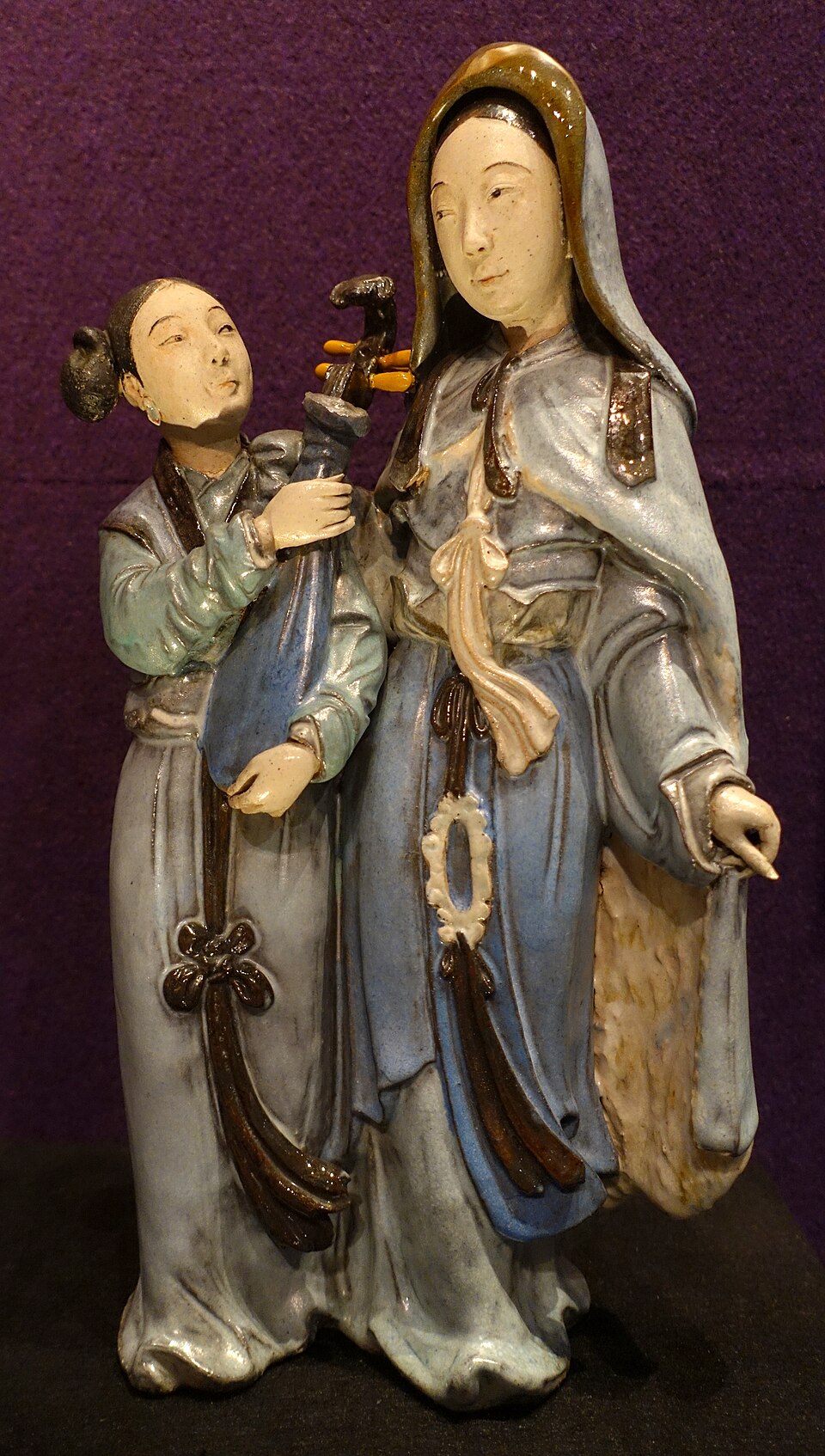 Start with subject and complete silhouette
Name every figure and prop before turning the piece over. Missing fingers, flowers, reins, or ornaments can hide inside a busy group.
Photo: Daderot / Hong Kong Museum of Art, CC0, via Wikimedia Commons.
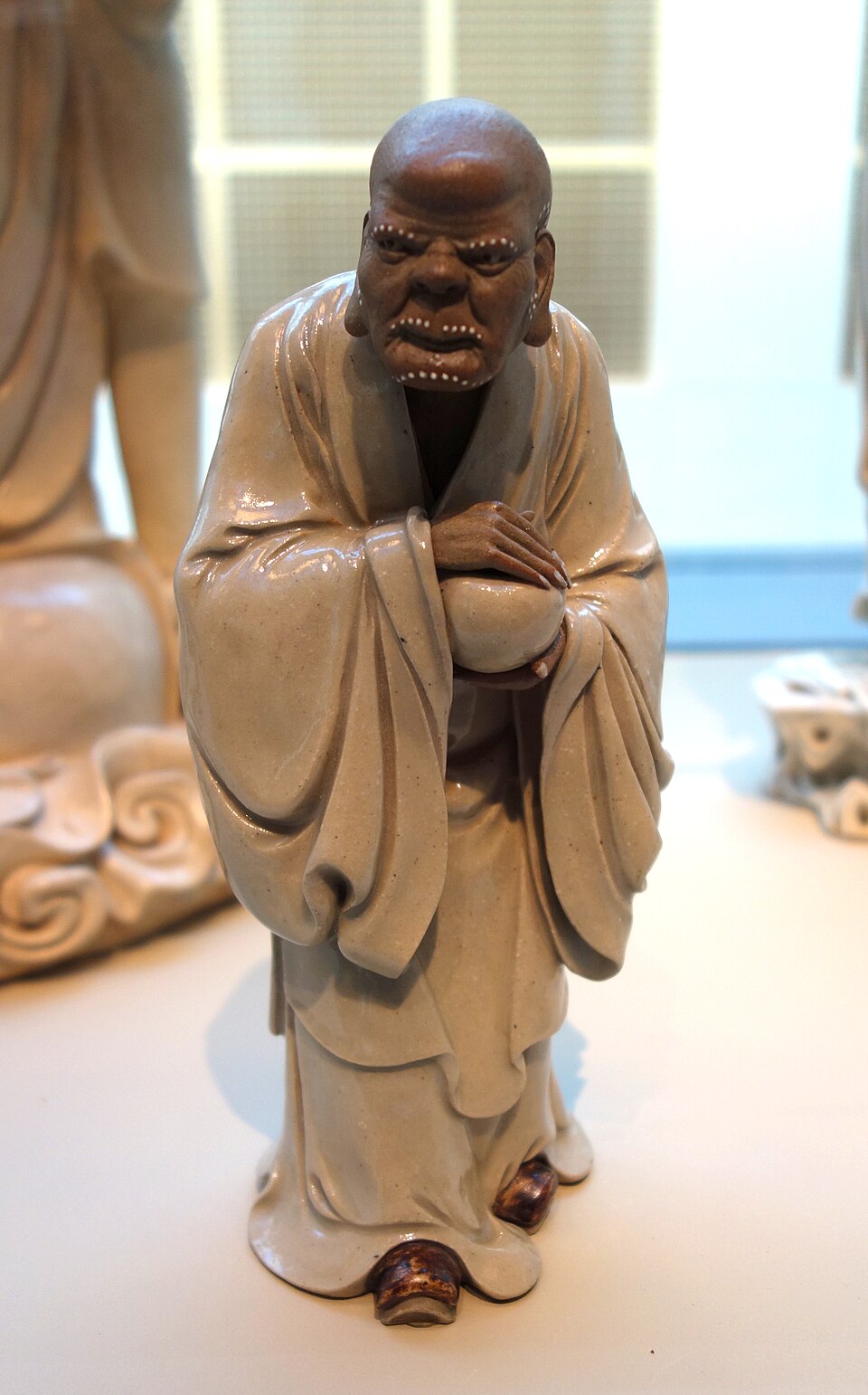 Compare exposed clay with glaze
Photograph face, hands, feet, robe, and base in the same light. Unglazed and glazed surfaces support construction analysis but do not date the piece alone.
Photo: Daderot / Asian Art Museum, CC0, via Wikimedia Commons.
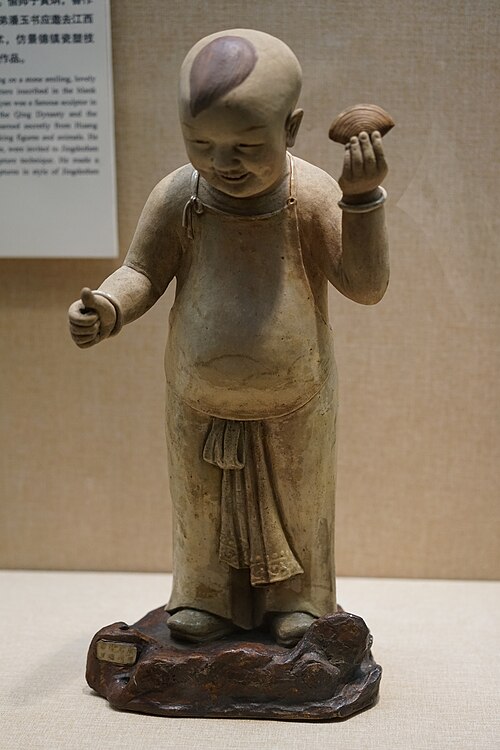 Light every projection
Inspect fingers, hair, sleeve tips, feet, and base edge for chips, glue, fill, and repaint. A clean front view cannot clear the hidden side.
Photo: Augustohai / Guangdong Museum, CC BY-SA 4.0, via Wikimedia Commons.
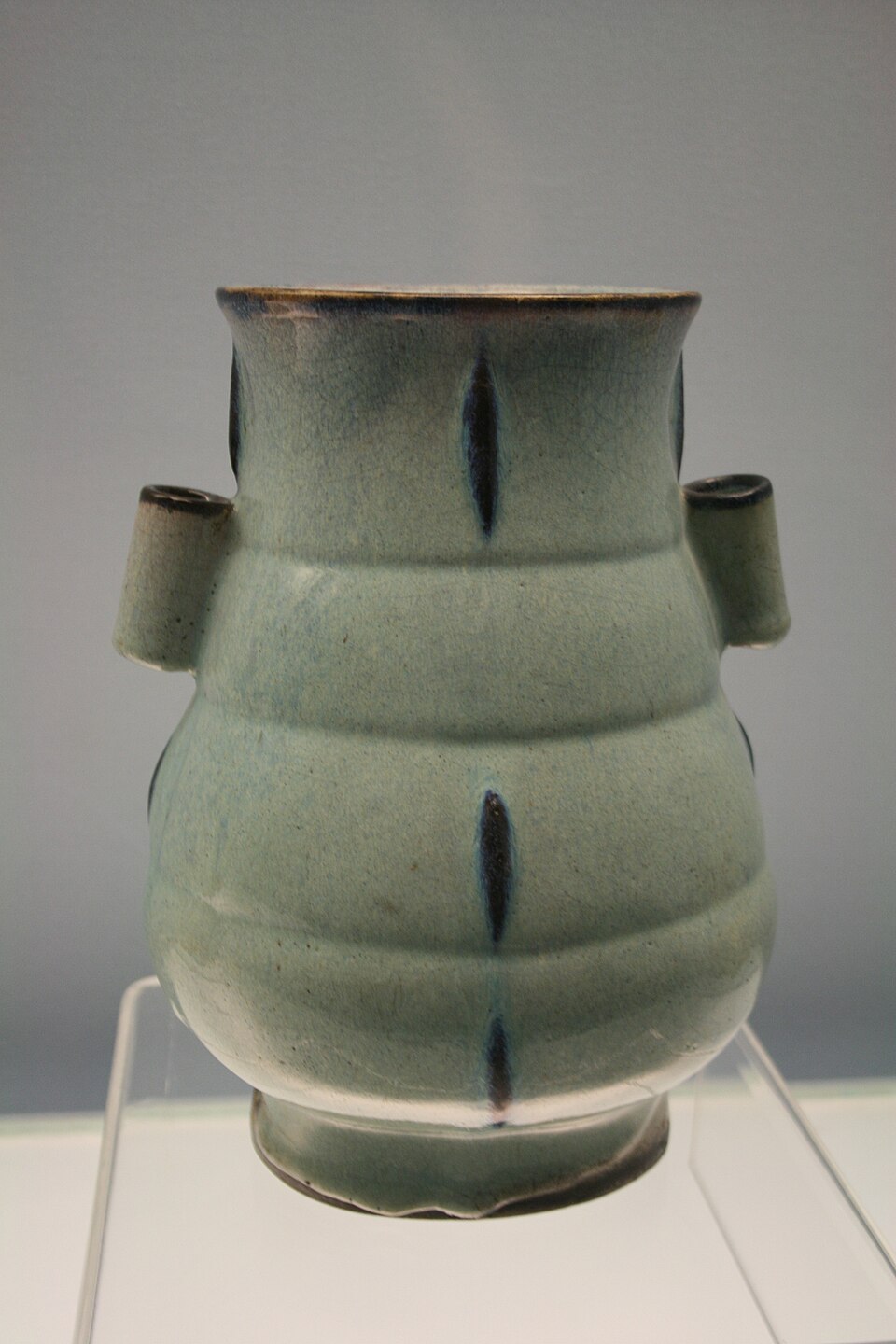 Separate visual style from attribution
This real Shiwan vessel proves region, not a specific artist. For a figure, add straight and raking-light base photos before naming a maker or date.
Photo: Gary Todd, CC0, via Wikimedia Commons.
- Turn it over: shoot the complete base before trying to read one promising character.
- Change the light: use straight light for layout and side light for incised or impressed strokes.
- Separate the marks: title, artist, workshop, seal, mold number, and later inventory marks each get their own note.
- Check the body: exposed clay, hollow construction, glaze boundaries, and base wear.
- Circle the damage: fingers, flowers, hair ornaments, sleeves, animals, and the base edge.
- Search narrow: artist plus title first. Use broad Shiwan sold results only for an unverified decorative piece.
Clean and appealing, but no readable maker, title, or workshop evidence. Price it as decor.
Base is clear, body is intact, but the individual artist is not confirmed.
Good modeling and glaze with no broken projections. Heavy and fragile shipping keeps the margin tight.
The full inscription agrees with a catalog, museum, official archive, or equivalent item-specific source.
- Front, back, both sides, top, full height, width, and weight. Include the stand, box, certificate, and any loose part.
- The complete base in flat light and raking light, then every inscription and seal as a separate close-up.
- Exposed body clay, hollow interior, glaze boundaries, bottom edge, firing marks, and surface wear.
- Every finger, flower, hair ornament, sleeve, animal projection, chip, crack, glue line, fill, repaint, and suspicious color change.
- A structural crack crosses the body, or the head, hand, flower, or animal part has been reattached.
- The seller will not show the base, inscription, seal, or repaired area.
- "Qing," "antique," "master made," or "one of a kind" appears without item-specific evidence.
- A black letter or scratched inventory number is being sold as an artist mark.
- The price comes from an active listing, auction starting bid, or a different artist's work.
- A large fragile figure is already near ordinary sold value before packing, fees, returns, and repair risk.
Link disclosure: eBay links currently open ordinary sold-search results. If a link becomes commission-earning in the future, it will be clearly identified near the link.
Reference photographs document historic Shiwan forms and named works; they do not authenticate the object in your hand. Visible eBay sold evidence checked July 2026 included small generic figures at roughly $10-30 and larger intact women at $84.98 and $114.99. Exact artist comps remain sparse, so the field ceiling stays low. Auction starting bids are not sold prices.