Teddy bears · factory marks, mohair & studio artists
Collectible Teddy Bears & Artist Bears
A bear becomes searchable when its maker, name, material, edition, and condition can be proved. Without those anchors, "old," "mohair," and "artist made" are only clues.
In November 1902, on a hunting trip in Mississippi, Theodore Roosevelt was offered an easy trophy: an old black bear his guides had run down and tied to a tree. He refused to shoot it. A Washington Post cartoonist named Clifford Berryman drew the moment and shrank the bear into a wide-eyed cub, and a Brooklyn candy-shop couple, Morris and Rose Michtom, set a stuffed version in their window and called it Teddy's Bear. That same year, an ocean away, Richard Steiff was finishing a jointed mohair bear with long arms and a humped back, soon shown at the Leipzig toy fair. Two countries, one animal, the same year: the teddy bear was born twice.

Act ITwo origins create one companion
The two bears were built on different ideas. The Michtom bear was sentiment, made soft and cheap enough for any nursery, and within a few years the couple's kitchen-table trade had become the Ideal Novelty and Toy Company. Richard Steiff's bear was engineering: disc joints that let the limbs turn, a firm mohair body, a shape meant to last and to be recognized. That same split waits for you at an estate sale. An anonymous, well-hugged bear can hold a family's whole history and almost no resale value, while a Steiff with a readable article number belongs to a catalog, and a catalog means sales you can compare.

Act IIThe mark turns sentiment into identity
In 1904 Steiff began pressing a small metal button into the left ear, one of the first trademarks of its kind in toys, precisely because copies were everywhere. That button is now the most valuable square centimeter in the hobby. Merrythought, founded in the Ironbridge Gorge in 1930, still sews a gold-and-black label onto the right paw, and still asks owners to send close photos of it before anyone talks price. The lesson for a reseller is blunt. Mohair, glass eyes, felt pads, a working growler, and disc joints all refine the description, but they never replace the mark: material tells you what a bear is made of, and the label tells you what it is worth.

Act IIIThe artist signs the paw
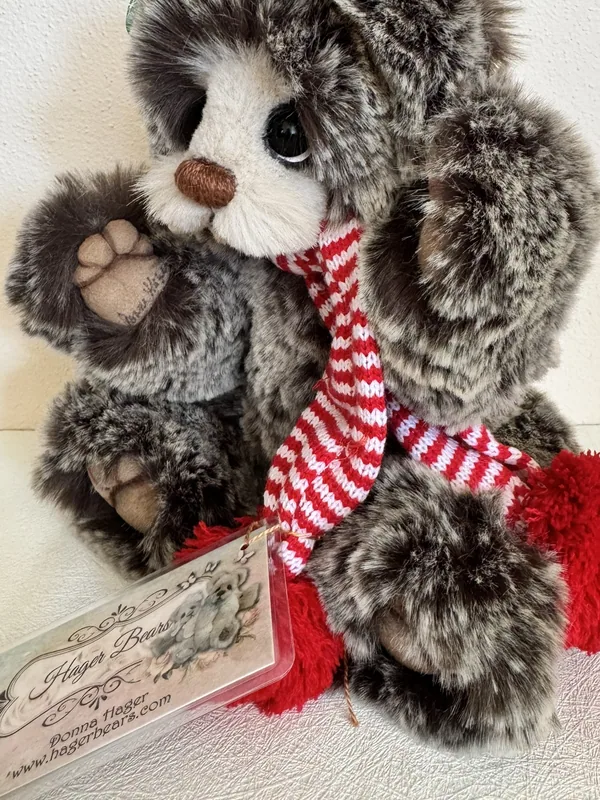
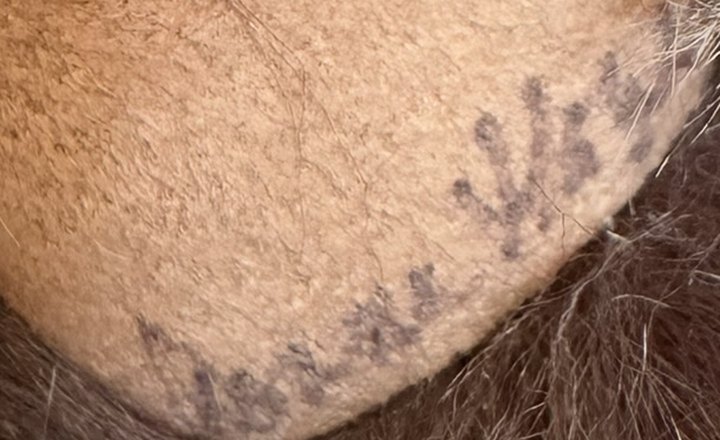
By the late twentieth century a third kind of bear appeared, made one at a time. Instead of a factory catalog, a single artist works out a face, a pattern, and a name, then signs the paw pad and writes the materials onto a tag the way a painter signs a canvas. Donna Hager's studio bears are a working example: individually made for adult collectors, with signed pads, laminated spec tags, hand-blown glass eyes, weighted filling, and sewn clothing. For a bear like this the paperwork is not packaging. It is half the object.
Act IVThe resale market demands precision
One word hides four markets. "Mohair bear" can mean an early labeled maker, a modern limited edition, an unsigned studio piece, or a mass-market bear wearing an optimistic listing. Completed sales run from pocket change for the vague and unmarked to real money for named early makers and collected artists. The field rule has to be unromantic, because charm is exactly what will overcharge you: with no exact identity, there is no high ceiling. Buy the proof first, then the face.
Early maker labels, article numbers, named designs, signed artist work, OOAK or small editions, documented mohair, original clothing, and complete certificates.
Steiff and Merrythought specialists, artist-bear collectors, edition-number hunters, nostalgia buyers, and themed display collectors.
Photograph the ears, both paw pads, tush tag, hang tag, and certificate before searching. A small artist name with no exact sold record stays a low-cost, slow-turn item.
Sources: Smithsonian: Teddy Bear · Steiff: History of the Teddy Bear · Merrythought: Our History · Merrythought: What We Do · Hager Bears: About Donna · Hager Bears: Materials and signed tags
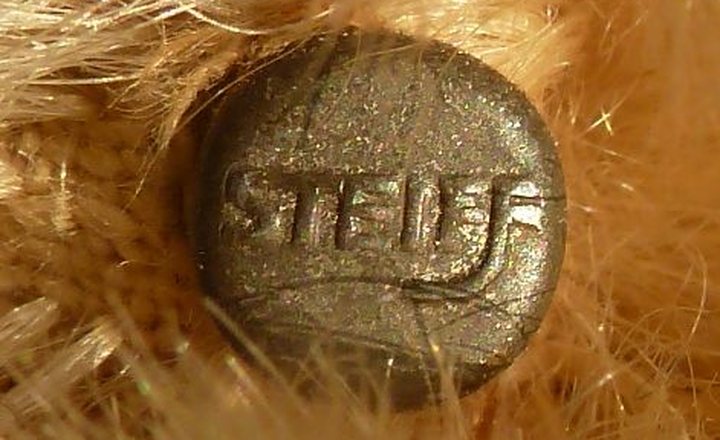 Steiff: the left ear
The embossed metal button shown here is the first check. If a woven flag remains under it, photograph the article number and size too. Shoot the ear from both sides, plus any chest tag. A missing mark is missing evidence, not proof of great age.
Photo: Grey Geezer, public domain, via Wikimedia Commons.
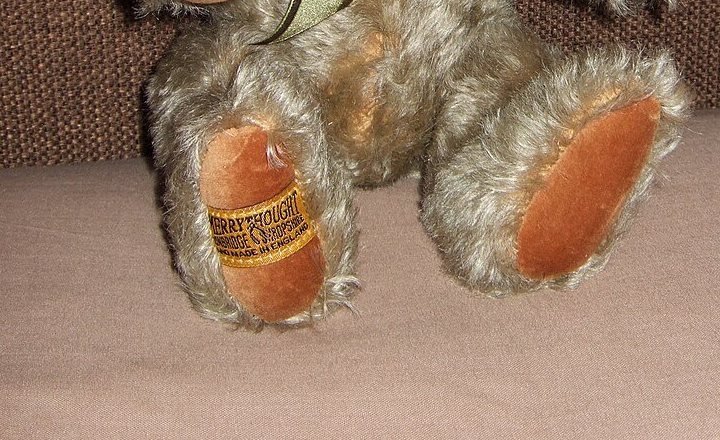 Merrythought: the right foot
This gold and black woven label is stitched to the right foot pad. Wording changed over the decades, so photograph it rather than matching it from memory. A glued-on label is a bad sign.
Photo: Dpaajones, CC BY-SA 3.0, via Wikimedia Commons.
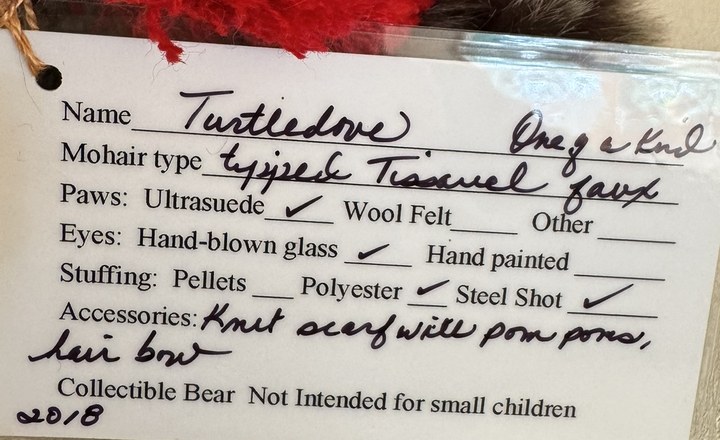 Artist bears: the maker tag
The printed side names the studio. This is the side worth money: bear name, one of a kind, fur type, pads, eyes, stuffing, accessories, year. Every blank filled in by the person who made it. Photograph both sides, because sellers shoot the pretty one.
Photo: Thrift Field Guide, own collection.
Artist bears: the signature on the padExpect it to look like this, not like a crisp autograph. Ink fades into felt, so tilt the pad against a window and shoot it straight on. Check the name, year, and number against the tag. A printed or stamped name is not a signature.
Photo: Thrift Field Guide, own collection.
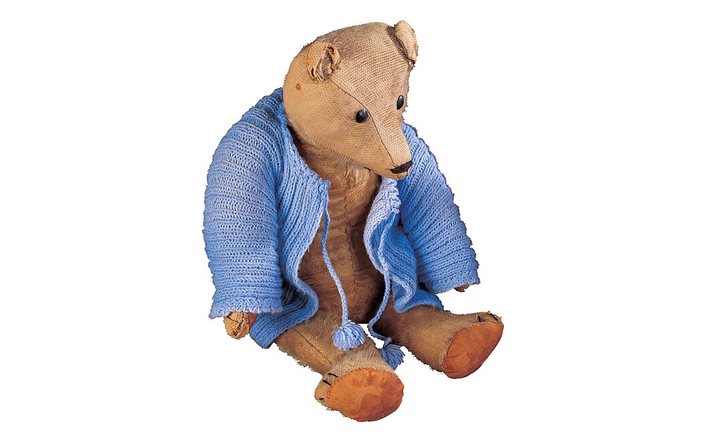 Condition that moves the price
This museum bear shows pile worn down to the ground and heavily abraded pads. Also check for mismatched eyes, exposed fill, loose joints, and repairs. Smell the bear before buying because smoke, urine, and mildew do not show in pictures.
Photo: Oberlehrer Erbsenzähler, cropped from Fæ, CC BY-SA 4.0, via Wikimedia Commons.
Mohair is a goat, not a grade
Mohair comes off an Angora goat. It is not the angora rabbit that gives you fuzzy sweaters, and it is not sheep. The fibre grows long and slightly crimped, its surface scales only partly overlap so it is smoother than wool, and it carries a shine wool cannot. It also resists felting. That combination is why a mohair bear looks lit from inside while a supermarket bear looks like a bath towel, and why a well-kept mohair bear still shows separate fibres instead of a matted board.
 Mohair
 Synthetic
Cloth like that is still woven in small runs, mostly on German looms, and sold by the quarter yard to people who make one bear at a time. Before synthetics took over the toy trade a good bear had to be mohair because there was nothing else. After synthetics took over, anyone still paying for mohair is deliberately not making a toy. So the material narrows the era and it tells you who was holding the scissors. What it does not do is name them.
None of which helps you at a folding table, because pile is hard to read through a phone camera and impossible to read across a driveway. The ground under the pile is easy. Part the fur at a seam and look at what the fibres are anchored in: a woven cotton grid means mohair plush, a stretchy knit that gives when you pull it means modern synthetic, and a smooth leather hide means somebody cut up a fur coat.
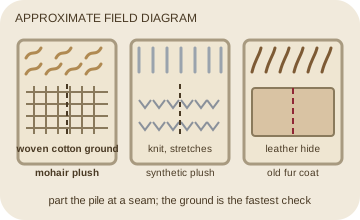
Two cautions, both of which cost money. Synthetic cloth is made to imitate mohair and artists also work in alpaca, so a woven ground narrows the field without closing it; only the maker's own card settles the material. And read the value on that card, not the label printed beside it.
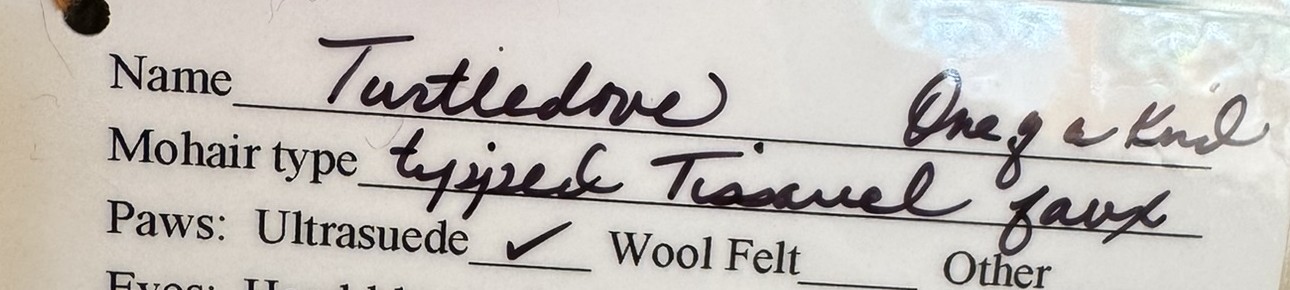
That card belongs to a one of a kind studio bear with hand blown glass eyes and a signed pad, and its fur is synthetic. The bear is not worth less for it. Mohair raises the floor of what a bear could plausibly be. The ceiling still comes from the ear, the paw, and the paperwork.
Sources: USDA: The Angora Goat and Mohair Industry, 1929 · USDA Farmers' Bulletin 1203: The Angora Goat · Hager Bears: Materials and signed tags
- Choose the lane: legacy maker, signed artist, recycled-fur studio bear, or mass-market collectible.
- Find identity: ear button, paw label, tush tag, hang tag, signed pad, COA.
- Record size and material: standing or seated height, mohair or faux fur, eyes, pads, joints, filling.
- Inspect condition: eyes, pads, seams, joints, fur loss, odor, pests, and repairs.
- Search exact words: maker + bear name or article number + size + material, sold listings only.
- No exact comp? Keep the ceiling low and label confidence medium or low.
Legible mark, searchable model or era, clean mohair, sound joints and paw pads.
Bear name, artist, signed paw, COA/spec card, documented materials, complete accessories.
Good construction but no artist, certificate, or maker mark. Mohair does not create liquidity by itself.
Part the pile and you find a smooth leather hide instead of woven cloth. Wants clean condition and an artist signature or tag. Never call it mink without evidence.
Common examples are lot material. Pay more only for an exact rare style with its paperwork and sold proof.
- Smoke, urine, mildew, active pest traces, or damp, clumped stuffing.
- Missing eyes, split pads exposing fill, loose joints, major bald areas, or unexplained glue repairs.
- The seller wants collector money for "old," "rare," "mohair," or "mink" without a label, backing view, or exact sold evidence.
- A common Boyds, Bearington, or Ty bear costs more than a low lot price merely because its tag says retired or collector's edition.
- An adult collector bear with glass eyes or weighted filling is being represented as a children's toy.
- Full front, back, and side; seated and standing height; left ear; both paw pads; tush tag; hang tag and COA front and back; signature and edition number.
- Part the pile at a seam and photograph the ground itself: woven grid, stretchy knit, or leather hide. Then shoot eyes, embroidered nose, pads, joints, seams, growler or squeaker, and any weighted filling described on the card.
- Lay out original hats, dresses, necklaces, boxes, and paperwork. Give every bald spot, split pad, restitch, glue repair, stain, and replacement part its own close-up.
Link disclosure: eBay links currently open ordinary sold-search results. If a link becomes commission-earning in the future, it will be clearly identified near the link.
Questions collectors ask
Does a button in the ear prove that a teddy bear is an early Steiff?
No. Compare the button, ear tag, chest tag, materials, proportions, joints, and construction with a documented model. One loose or replaced mark is not enough.
How can you tell mohair from synthetic plush on a teddy bear?
Part the pile at a seam and look at the ground the fibres are anchored in. A woven cotton grid points to mohair plush, a stretchy knit backing points to modern synthetic, and a smooth leather hide means recycled coat fur. Mohair still does not set the price by itself: it raises the floor of what the bear could be, while maker, artist, edition, and condition set the ceiling.
What paperwork matters with an artist teddy bear?
Photograph the signed paw, sewn label, hang tag, certificate, edition number, original name, and maker contact details. Match those records to the bear before pricing it.
Reference photographs document historic forms and construction; they do not authenticate the bear in your hand. Buy ceilings reflect visible eBay sold evidence checked July 2026. Sparse exact artist comps mean medium or low confidence and a lower field price.